Friday, February 27, 2015

Crews Keep Rolling in Albuquerque

"Breaking Bad" stopped filming almost two years ago.  Many people were worried that this would be the end of production in Albuquerque.  However, the exact opposite that happened.  "Better Call Saul" and "The Night Shift"  are both currently being filmed in Albquerque.  There is also a new Adam Sandler western production that will be starting soon.  Hollywood still had it's sights set on Albuquerque.  You can learn more here. 

When the last “Breaking Bad” episode aired almost two years ago, New Mexico officials feared film and television production might end in the state after the series brought welcome attention and tourism to Albuquerque.

But production in the state is showing no signs of slowing and may be expanding, according to industry leaders.

“Better Call Saul,” a “Breaking Bad” prequel on cable channel AMC, just wrapped up filming of its first season and has drawn strong reviews.

The series follows a struggling criminal lawyer, played by Bob Odenkirk, as he defends drug lords, petty criminals and people who claim they were injured in traffic accidents.

NBC is filming its second season of “The Night Shift” in Albuquerque after it surprised critics with high ratings among younger viewers this summer.

The drama follows the red-eye medical crew of a San Antonio emergency room and stars a diverse cast that includes Freddy Rodriguez and Dublin-born Eoin Macken.

A new Adam Sandler western production is set to begin, and the state film office is expected to announce a major movie production.

Albuquerque Studios chief operating officer Wayne Rauschenberger said New Mexico’s reputation as an attractive site for filming and its tax breaks keep productions coming.

“As soon as ‘Breaking Bad’ ended the phone started ringing,” Rauschenberger said. “Productions know we have local crews and the infrastructure so it’s relatively easy to get projects going.”

Legislation known as the “Breaking Bad” bill passed by state lawmakers in 2013 increased rebates for television shows from 25 percent to 30 percent, Rauschenberger said.

It provides tax refunds based on certain film and TV production expenses, with a total cap on payouts of $50 million a year to the industry.

A recent study shows film production spending created nearly 15,900 full-time jobs and generated about $104 million in taxes from mid-2009 through early 2014.

However, Rauschenberger said the $50 million annual cap on payouts might not be enough in the future.

“It might need to be increased (by) $10 million in 2016 and another $10 million the next year,” he said.

Gabe Sachs, an executive producer for “The Night Shift,” said he appreciates the quality of life the actors experience while in New Mexico. He said actors enjoy relative anonymity around the state and don’t have to worry about the headaches that come with paparazzi.

“That’s a big part of it,” Sachs said. “The cast doesn’t have to deal with distractions and they can enjoy themselves while they are here.”

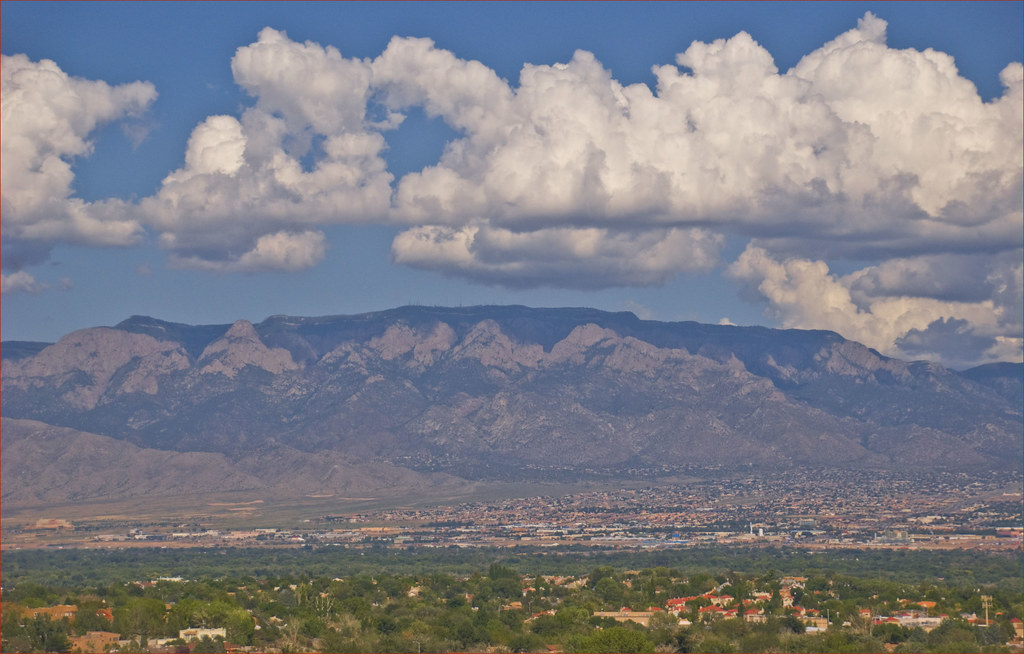
Macken, who plays Dr. TC Callahan on “The Night Shift,” said he jogs in the morning near the Sandia Mountains and no one bothers him.

“I love the sunsets here and how I can just walk around,” Macken said. “And if anyone recognizes me, it’s always great. It doesn’t bother me.”

Brandan Fehr, who plays Drew on the same show, said he moved his family to Albuquerque during film.

“I wanted them to get the whole experience,” Fehr said “We can look back years from now and say we lived in New Mexico.”

Friday, February 20, 2015

A New Way To Display History

This is not your typical history exhibit.   The Albuquerque Museum of Art and History has a brand new City of Albuquerque exhibit which opens March 3rd.  The exhibit featured four galleries that display various elements of our city's long history. Keep reading and you can learn more at the Albuquerque Journal.


This isn’t your grandfather’s history exhibit.
You won’t find regiments of faded military uniforms or rooms of frontier furniture or rows of obsolete farm implements – although there is a sampling of all that.
You will find Chester Nez, the late Navajo code talker, telling you how he prayed the traditional prayers of his people to help him endure the horrors of World War II.
You’ll zip along Central Avenue, catching snatches of conversation from the Frontier Restaurant as you whip by. You’ll smell the fresh, hot coffee and cherry pie served at Albuquerque’s razed, but fondly remembered, Alvarado Hotel.
This is the Albuquerque Museum of Art and History’s new, $4.4 million “Only in Albuquerque” exhibit, which opens to the public March 3. With this exhibit, which features four galleries titled Resourceful, Innovative, Spirited and Courageous, the museum at 2000 Mountain Road NW gives fresh meaning to the term living history.
The sights, sounds and odors of a bygone Albuquerque are vivid once more via videos, app-prompted supplemental stories, hands-on activities and a smell center in which aromas waft up from concealed, scent-infused blocks.
In an animated storybook feature in the Spirited Gallery, a figure from an iconic Old Town mural comes to life to talk about the diverse people who helped found Albuquerque. The storybooks – there are two in each of the exhibit’s four galleries – are aimed primarily at young visitors, but anyone watching them will be delighted and informed.
“We want people to be more engaged than just reading labels,” said Cathy L. Wright, museum director, as she provided a preview tour earlier this week.
No problem there. The biggest challenge facing visitors will be what to see or do next in a presentation that offers numerous interactive opportunities.

Route 66 postcards

For example, you can call up a display of old Route 66 postcards, flip them over electronically and read the original message written decades ago. Then you can choose one of the postcard designs, create your own message on a keypad and email it to someone.

In a story booth feature, sponsored by the Albuquerque Journal, you can make film clips of your own Albuquerque story – family tales, memories, observations, impressions – some of which will be selected for inclusion in the exhibit.You can see the immense family shield of the Duke of Alburquerque, presented to the city in 1956 by the 18th duke. But you also can use an interactive program to create your family crest.
Wright figures it will take the average person two to three hours to absorb the whole exhibit and that most people will need more than one visit to fully appreciate it all.
Funded by general obligation bonds and money raised by the museum’s foundation, the project took more than two years from conception to completion, several months longer than originally planned.
“When you have so many contractors and contracts, it is difficult to coordinate them,” Wright said. “It sort of gets bigger than you think. And there were some enhancements.”
The history exhibit is in addition to a $4 million museum renovation project also recently completed.

Blend of old and new


“But now he’s going to be joined by a Tiwa Indian leader and a Mexican Indian ally,” said Wright as she paused in front of the lonely conquistador and his steed. “They are coming this weekend.”“Only in Albuquerque” replaces the museum’s previous history exhibit, which was 30 years old, but it also incorporates some of the items displayed in the earlier exhibit, such as the duke’s family shield and a mounted conquistador.
The idea of the new exhibit is to tell a vastly expanded and more accessible story of Albuquerque. According to Wright, 65 percent of the 120,000 people who visit the museum each year are from New Mexico or the region and are therefore invested in a story of a Southwest city.
“What we are really hoping is that people will be able to make a connection with something here and figure out how they fit into the bigger picture,” Wright said.

Four themed galleries

It all starts in the Our Land Gallery, which serves as the hub of the four themed galleries. This central gallery celebrates the beauty of the land and the role the land played in establishment of the community. The biggest attraction here – and perhaps in the entire exhibit – is an interactive floor map of the Albuquerque area with hot spots that can be activated by using an iPhone with the Albuquerque Museum app. When a hot spot is activated, you get more information about Old Town, Sandia Crest, Route 66, Isleta Pueblo, Kirtland Air Force Base, the Alvarado Hotel and others.
“The one we added at the last minute was ‘Breaking Bad,’ ” Wright said. “It is centered over an Octopus Car Wash that was featured in the series and it has (executive producer) Vince Gilligan talking about why Albuquerque is the perfect place for ‘Breaking Bad.’ ”

You don’t need the app to watch the video featuring code talker Nez in the Courageous Gallery. War figures prominently in this gallery, but other kinds of courage are explored here, as well.Visitors also may use the museum app to get additional information related to exhibits in the various galleries, the typewriter of famed war correspondent Ernie Pyle, for example. Wright said people who don’t have an iPhone can check out an iPod with the museum app at the admissions desk.
“It also talks about what it was like for Native children to be sent off to boarding school,” Wright said. “And it is about economic hardships, working through the Depression.”
The Innovative Gallery traces Albuquerque history from a farming and barter economy to an economy fueled by tourism, transportation, research and development. There are stories in the Resourceful Gallery about natural resources, but also about the resourcefulness of Albuquerque’s people.
The Spirited Gallery is about community, the blending of cultures, spirituality, family and food. Here, children can crank a chile roaster. There is no chile in the roaster – at least not yet. And there won’t be any fire.
“But we’re working on recreating the smell of roasting chile,” Wright said.

Wednesday, February 11, 2015

Albuquerque Valentine's Day

Valentine's Day is quickly approaching.  Do you have the perfect weekend planned for your loved one yet?  Albuquerque is a very romantic city.  From hotels to restaurants, there is something for everyone's perfect Valentine's Day.  Check out these great packages from various top rated Albuquerque attractions and hotels. There is still time to have your dream Valentine's Day.  You can learn more here. 


With spectacular sunsets, endless romantic activities and fantastic hotels and restaurants, Albuquerque is an incredibly romantic city. It’s no wonder DatingAdvice.com recently ranked Albuquerque as one of its 10 Unexpected Cities for the Perfect Date. With Valentine’s Day just around the corner, the Albuquerque Convention and Visitors Bureau and its partners have done the legwork for you and pulled together the best ways to surprise your sweetie on Valentine’s Day.

Here are some ideas for all types of couples:

Smart Sweethearts – The “I Love Science Valentine’s Day Getaway” package, offered by Hotel Albuquerque at Old Town, features accommodations at the hotel, a mixology class at the sophisticated Q Bar and entrance to Explora, which just happens to be featuring an exhibit called “XOXO: An Exhibit about Love & Forgiveness.” And, the ABQ BioPark Aquarium is featuring an event called “That’s A Moray!” where couples will learn about the mating rituals of underwater creatures.

Playful Paramours: Work up a sweat with Routes Bicycle Rentals & Tours, which is offering its “Velo-Tines” bike tour. Aside from the spectacular scenery along the Bosque Trail, couples will experience a wine tasting and tour at Casa Rondena Winery, a ride through the grounds and lavender fields of Los Poblanos Historic Inn & Organic Farm and a package featuring locally-made cookies, tea and Los Poblanos’ famous lavender products. Then, head to Isleta Resort & Casino for their Romance the Night Away package, which features upgraded accommodations, champagne, chocolate-covered strawberries and a dining credit.

Doting Duo: The cozy Downtown Historic Bed and Breakfast is offering a romantic package that includes a one-night stay, massage for each of you, roses, champagne and strawberries, dinnerfor two at the nearby Artichoke Café and gourmet breakfast the following morning. Wake up early to see the sky filled with color at the Friends & Lovers Balloon Rally at Balloon Fiesta Park. Grab a coffee or a hot chocolate and watch more than 100 balloons hit the sky to celebrate love.

For more Valentine’s Day packages, including hotel specials, go tohttp://www.VisitABQ.org/valentines.

Thursday, February 5, 2015

Organize That Junk Drawer


Do you have a junk drawer in your kitchen? If things are falling out of your drawer, it might be time to organize it. However, that does not mean you need to buy an expensive drawer organizer. Here are some ideas on how to organize your drawer without spending a dime.. You can learn more on Apartment Therapy.

This is how I organized my junk drawer without buying a thing.

Why Didn't I Buy Anything?

First: What was the reasoning behind not buying any organizers?

It was about more than saving money. In her book, The Life-Changing Magic of Tidying Up: The Japanese Art of Decluttering and Organizing, tidying guru Marie Kondo says that your home already contains all the storage it needs:

She goes on to sing the praises of shoe boxes, check boxes, business card boxes, jewelry boxes — "basically, any square box or container of the right size will do" when it comes to finding storage for your tidying projects.

I liked her thinking on this, so I searched through my apartment and picked up anything I thought could be used to organize the junk drawer. Here's what I found — all items that have been in my possession for at least a year.

The Boxes and Containers I Found Around My Apartment
A shoe box lid ("the lid of a shoe box is shallow and can be used like a tray" — preach it, Marie Kondo!)
A cardboard box for checks
Metal lids from some tin containers in the kitchen
Various cardboard boxes — bottoms and tops — from an old Birchboxsubscription (bonus: they have cool interiors!)
A couple small pink and green boxes I'd had around for years
A small ceramic bowl
A birch wood container from IKEA
A jewelry box
The lid from an (almost) empty stationery box

I knew I wouldn't need all of them, but it was nice to have options for the next step: finding an arrangement that would work in the drawer.

It took about 10 minutes and a lot of swapping various boxes in and out — changing their orientation, moving up, down, and around — until I found an arrangement that used up the most available space in the drawer, and resulted in a tight fit, with most boxes nestled snugly next to each other.

Then the fun really started:

I assigned a storage task to each container: a box for all our pens, pencils, and dry erase markers; a box for paper scissors; a few boxes for our medicine bottles; and another box for my label maker (http://www.amazon.com/Epson-LabelWorks-LW-300-Label-Maker/dp/B005J7Y6HW/ref=sr_1_2?s=office-products&ie=UTF8&qid=1423069340&sr=1-2&keywords=label+maker&tag=apartmentth0a-20I have this one and I love it).

I used the shoe box lid to hold my two kitchen scales, and the ceramic bowl for rubber bands. Two more boxes went to hold all our batteries (which I left in the plastic packaging so they wouldn't roll around and become a fire hazard), and a roll of masking and painter's tape (a very handy thing to have in the kitchen).

And the jewelry box? I stuck the safety pins in there. This solution made me a little giddy, actually. The jewelry box has a snap closure, so the lid doesn't open unless you really pry it open — which makes it the perfect box to store a collection like paper clips or safety pins that you don't want spilling all over the floor.

When I was done, the whole thing looked like this:

And that's how I revamped my junk drawer for $0.


If this project has also been on your to-do list, I encourage you to go around your house and see what little containers, boxes, and storage goods you already have that can be repurposed or recommissioned. I was surprised to find I owned so many readily available containers. Believe me — I love a good "official" organizer as much as the next person, but doing it this way was quite satisfying.

Friday, January 30, 2015

Know These Things About Guacamole

Are you a guacamole fan?  If you are, you are probably very excited for the big game this Sunday.  However, if you are making guacamole, you want to make sure you are doing it right. Here are five things to remember when making guacamole!  You can learn more here. 

Whether you're a football fan or just snowed in at home, this weekend is probably a big one for guacamole. Whether you like it chunky or creamy, spicy or mellow, guacamole is basically the best thing on the snack table, and a welcome addition to a weekend meal of breakfast tacos or carnitas.

But if you're making guacamole, do it right. Here are five important things you should know about making the best guacamole.
1. Know this trick for picking the best avocados!

Do you have a knack for picking avocados with a streak of brown inside? Or ones that aren't quite ripe enough? Here's a fairly genius tip for you: the key to your avocado's health lies under the stem "button." Peel it away and take a peek.
2. Also? Always buy an extra avocado.

But even when you get really good at picking avocados, you should always buy an extra one when making guacamole. Christine explains: "If a whole avocado or even parts of a few of them have gone bad, I have an extra one as a replacement to make up for it in a recipe." And if all are good? Well, there's always room in our lives for one more avocado.
3. Avocados not ripe enough? Try a banana.

Gauging the perfect stage of ripeness for guacamole when you want it is a little tricky, though. If you buy avocados on the unripe side a few days ahead, and they're not ripening fast enough, a banana is your friend! Anjali explains how putting a banana in a paper bag really hurried the ripening process along.

4. Avocados too ripe? Refrigerate until you need them.

On the other hand, sometimes you buy avocados that are just a little too ripe and they threaten to turn into mush well before guacamole game day. The solution here is simple: refrigerate them! Refrigeration stops the ripening process, fixing your avocados at the perfect stage of ripeness.
5. Make guacamole ahead and use this tip to keep it green!

Last and certainly not least: yes, you can make guacamole ahead of time. No, it won't turn brown, provided you use our handy little trick for keeping it green. The power of water to banish oxidization is the key here: you simply cover guacamole with water, and refrigerate for up to 24 hours. Then pour off the water and stir. It doesn't get soggy or watery at all — the water all pours off. Give it a try!

Thursday, January 22, 2015

5 Ways to Improve Your Ramen

Do you enjoy Ramen?  Chef Masa Hamaya is helping you make the best ramen for dinner.  Follow these five steps next time you open one of your many flavors of Ramen.  You can learn more at Apartment Therapy.


Even though chef David Chang proclaimed that ramen is dead, I have to beg to differ. With the proliferation of ramen restaurants cropping up near me in San Francisco, it's hard to escape this complicated but soul-satisfying Japanese comfort food. To put it bluntly, everyone's serving it!

If you're brave enough to attempt making ramen (and not the instant kind) at home, here are five tips from chef Masa Hamaya to help you put together the perfect slurp-worthy bowl.
5 Expert Tips for Making the Perfect Bowl of Ramen
1. It's all about the noodles and broth.

Hamaya said that if the noodles and broth are perfect, toppings are pretty much unnecessary. Focus on getting your broth full of flavor and richness, and take your time doing it. If you're not making noodles from scratch, source the best possible ones you can find and buy them fresh.
2. Flavor and body in the broth come from lots of ingredients.

A lot of bones (and vegetables if you want to do a vegetarian broth) need to go into the stockpot, and he means a lot. You can't get good flavor and a thick broth without lots of ingredients and time to extract all the flavors. The stockpot should be packed full of ingredients before water is added, and a few gallons of water should reduce to only a few liters of broth when it's ready.
3. Never season your broth.

The broth is never seasoned because it is combined with a seasoned base (tare in Japanese) when individual bowls of ramen are composed. The base can be the braising liquid from meat, soy sauce, tamari, dashi, or countless other things, but salt is never added to the broth itself so that the seasoning in the final bowl of ramen comes from only one source.
4. Never salt the ramen noodle cooking water.

For the same reasoning as why the broth is never salted, Hamaya says that ramen noodles are never cooked in salted water. This is a departure from the Italian pasta cooking technique, but he was emphatic that again, the soup base seasons both the broth and the noodles when everything is combined together.
5. Cook the noodles properly.

Ramen noodles should be just cooked through, similar to cooking Italian pasta al dente. Undercooked noodles will be floury and tough, but overcooked noodles will be soggy and pasty. Cook your noodles at the last second when everything else is ready, keep a watchful eye on the time, and make sure you keep tasting the noodles so that the second they are ready, they come out of the water.

Thursday, January 15, 2015

5 Mistakes To Avoid In Your Stew

The winter is here, which means many people choose to make stew for dinners with friends and family.  However, we want your stew to taste delicious.  Get the perfect stew by going over these five mistakes to avoid. This will help your stew turn out just as you imagined.  You can learn more at The Kitchn.


1. Using the wrong cut of meat

Beef is beef, right? Wrong! Stew is the ideal time to skip the lean, pricier cuts of meat and go for the less expensive, tougher cuts. The long, slow cook time leaves lean meat, like sirloin, tough and chewy, while tougher cuts, like chuck, break down and become really tender.
→ Follow this tip: Stick with using chuck meat. As it cooks, this cut breaks down wonderfully and rewards you with tender, delicious bites. Bonus points — chuck meat is also budget friendly!

2. Not searing the meat

Whatever you do, don't just add raw meat to broth and expect it to make stew. Also, when browning, don't stop at lightly browning the cubes. Searing the meat is an essential step for making a great beef stew. This is where the stew really starts to build its deep, rich, flavor.
→ Follow this tip: No, if, ands, or buts, you've got to sear the meat! Don't just brown it. Set the cubes of beef in a hot pan and let them cook for a few minutes until the bottom has a dark crust, then repeat that process for the other sides of the meat. It's timely, but you'll be rewarded with an extra flavorful stew.

3. Adding the vegetables too soon

Vegetables cook a lot quicker than beef, so there's no reason to add them to the pot at the same time. Add them too soon, and you'll be left with mushy (and unappetizing) veggies.
→ Follow this tip: Add hearty vegetables, like carrots, turnips, and potatoes halfway through cooking. If you plan to include delicate vegetables, like peas, wait to add them until a few minutes before taking the stew off the heat.

4. Not cooking the stew long enough

Chuck meat is your best bet for beef stew, but it's also a pretty tough cut so it needs time to break down and become tender. Rush the cooking process and the beef will be tough and chewy.
→ Follow this tip: For really tender meat, cook the stew low and slow, for approximately two hours.

5. Serving your stew solo

Don't make your stew stand alone. Without bread or noodles how will you mop up the bottom of the bowl?
→ Follow this tip: Serve stew along with egg noodles, polenta, or a thick-cut baguette.
Twitter Delicious Facebook Digg Stumbleupon Favorites More